


Rugged PDA Solutions for Time-Critical Logistics: The KuaYue Express Case Study
When a carrier sells a delivery window, the margin for error is measured in minutes. KuaYue Express moves time-definite freight across China on same-day, next-day and day-after commitments — a business where a single repeated barcode scan at a loading dock can decide whether a parcel makes its flight. This case study looks at how the company standardized thousands of rugged PDA terminals across its network, and why the deciding factor turned out to be device management rather than hardware specification.
Why time-critical logistics breaks ordinary handhelds
A parcel in a time-definite network is scanned at pickup, at linehaul handover, at each transit hub, at the destination station, and again at proof of delivery. Each of those events is a data commitment: the moment the physical parcel and the digital record must agree.
At low volume, an unreliable terminal is an inconvenience. At network scale it becomes a systemic risk, because the failure modes compound:
- A slow scan engine adds queue time at the gate, which pushes back linehaul cutoffs downstream.
- An offline terminal separates the record from the parcel, and reconciliation happens later, by hand.
- An out-of-configuration device in a distant city stays broken until somebody notices — usually a customer.
For a logistics PDA, the practical requirement is therefore not “rugged” in the marketing sense. It is a device reliable enough that operators stop thinking about it, plus a management layer that makes exceptions visible before they reach the customer.
The challenge: four constraints at network scale
KuaYue Express operates a network covering more than 99% of Chinese cities, with over 45,000 vehicles and 21 freighters supporting a workforce of more than 105,000. Four constraints shaped the device programme.
1. Scanning speed had to match the pace of the dock
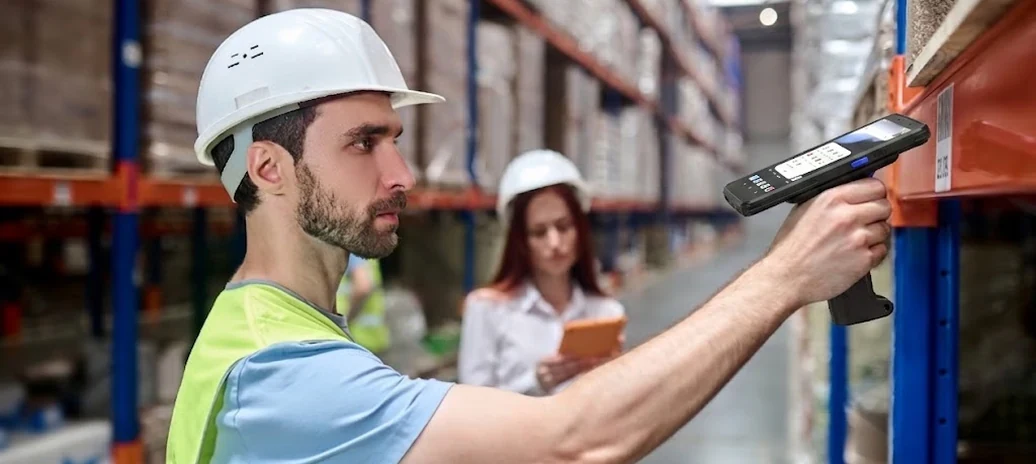
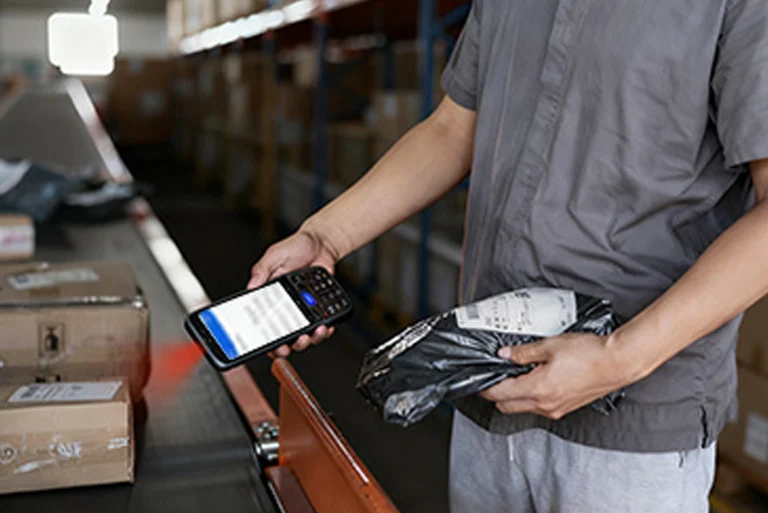
At a cross-dock, courier dwell time is set by the slowest step in the unload–scan–load sequence. Scan engines that need a second attempt on a wrapped, curved or partially obscured label — or a processor that lags behind a burst of rapid scans — translate directly into queue time at the gate. A barcode scanning PDA in this environment is judged on first-read rate, not on peak decode specification.
2. A multi-city network needed one set of rules
Operations span hub level, station level and individual couriers, across regions with very different field conditions. Devices configured locally drift: firmware versions diverge, applications multiply, and standard operating procedure quietly becomes a description of the average rather than a rule.
3. A fragmented device estate carried a hidden maintenance bill
Mixed hardware generations mean mixed spare parts, mixed failure modes, and technicians who must be fluent in several platforms at once. Every additional model in the field adds a support path, and that cost lands in uptime rather than in procurement.
4. Management could not see the last mile
Route performance and task completion were visible after the fact, in reports, rather than in motion. Without a live view of whether a route was progressing or stalling, dispatch decisions depended on phone calls and experience instead of data.
The requirement behind the requirement
The original brief read like a hardware specification. In practice it was a device-management problem wearing a hardware costume. Three questions determined the outcome far more than any drop rating:
- When a terminal hundreds of kilometres away starts misbehaving, how quickly does anyone know?
- When an application that should not be installed appears on a device, who catches it?
- When configuration drifts on one unit out of thousands, is that a visible exception or an invisible one?
Answering them required two layers working together: hardware reliable enough to be forgotten about, and a management layer capable of enforcing consistency without dispatching engineers to every site.
The solution: rugged hardware plus a control plane
Device layer
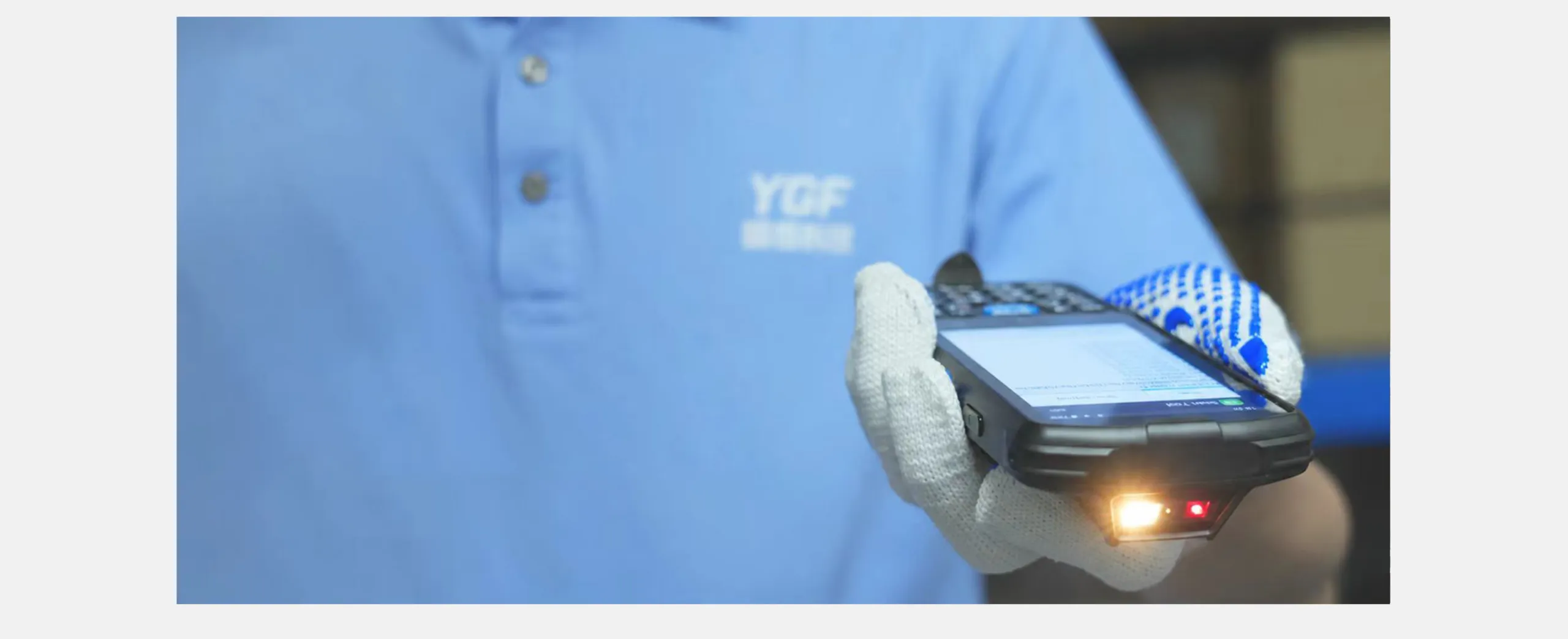
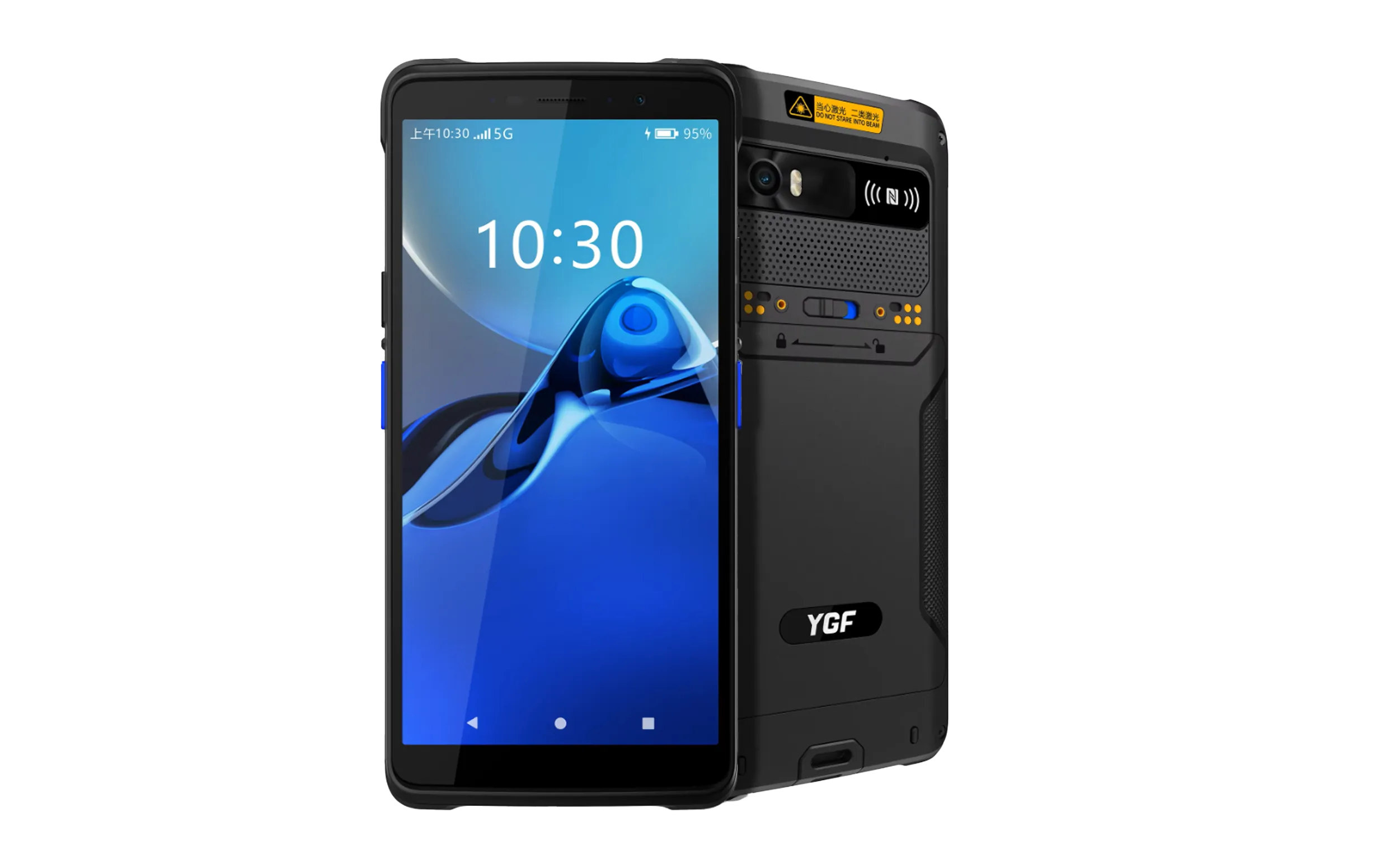
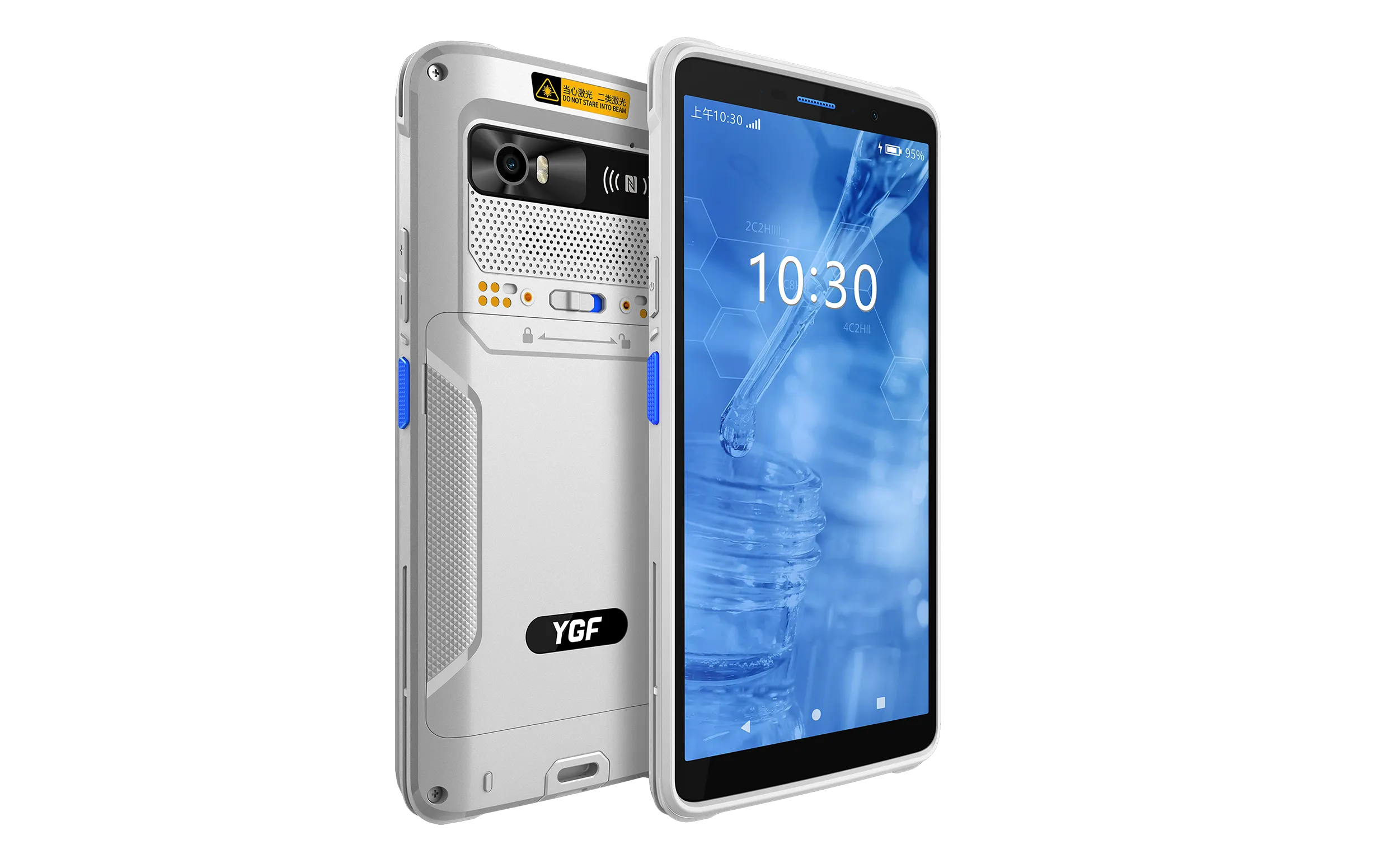
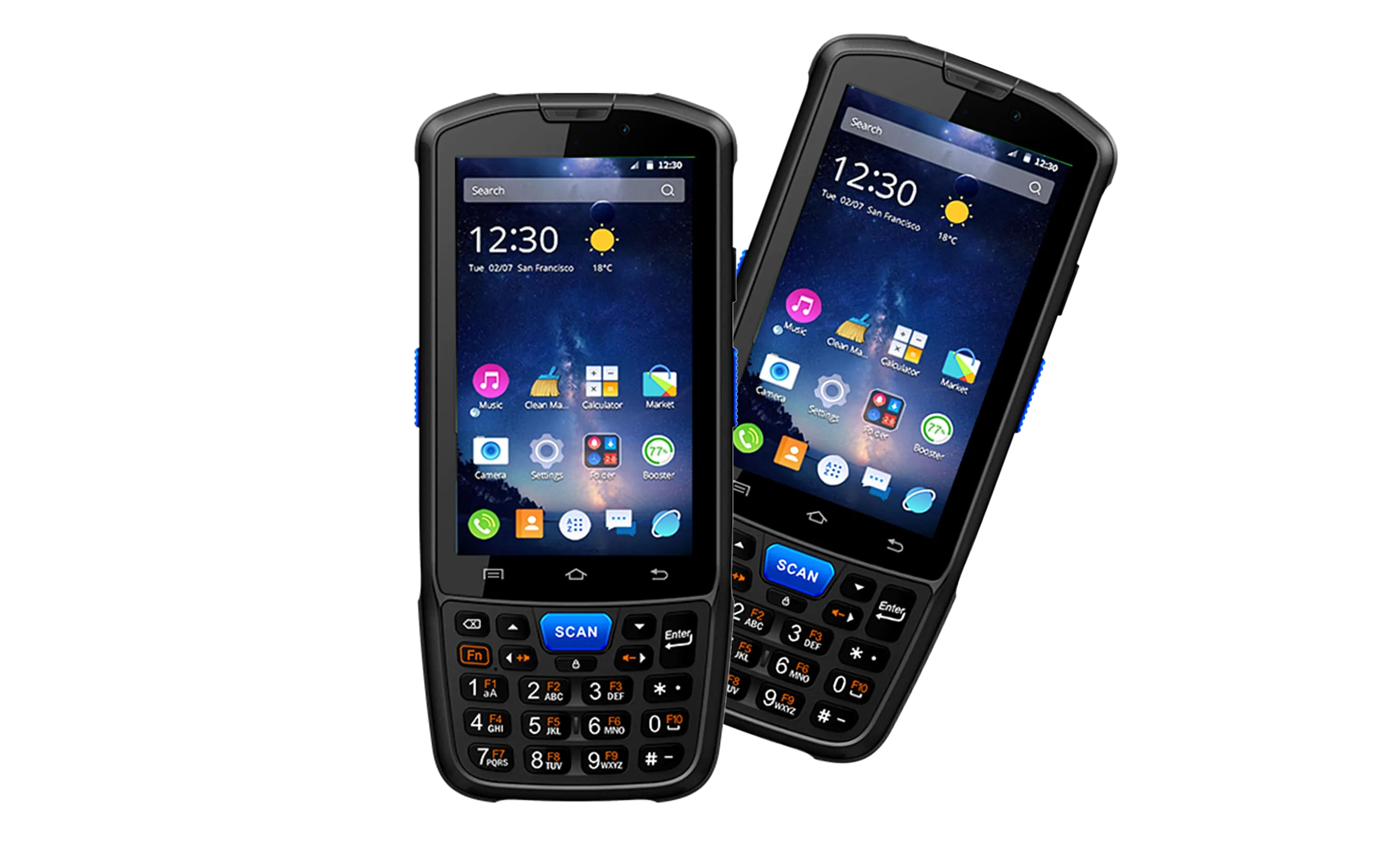
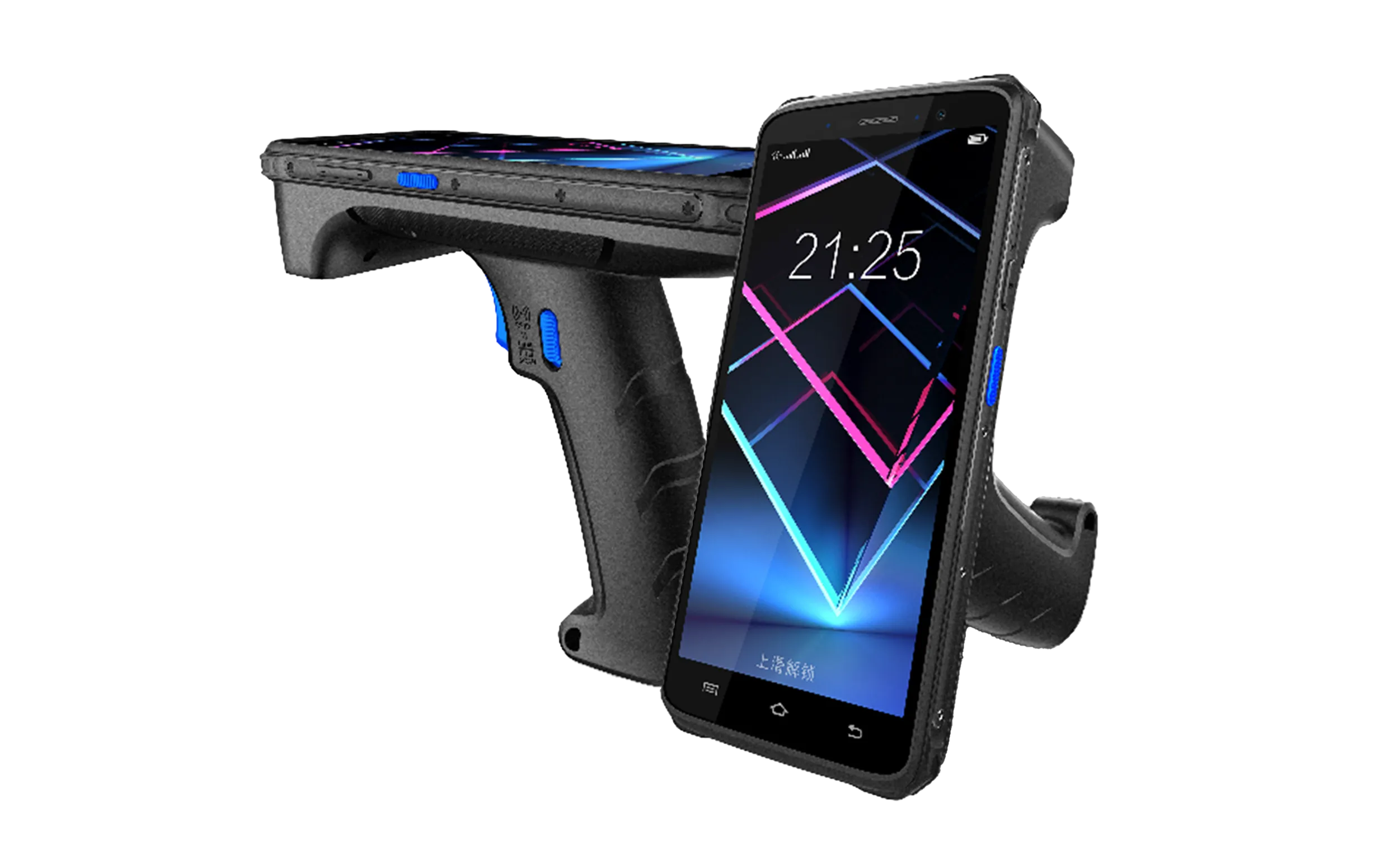
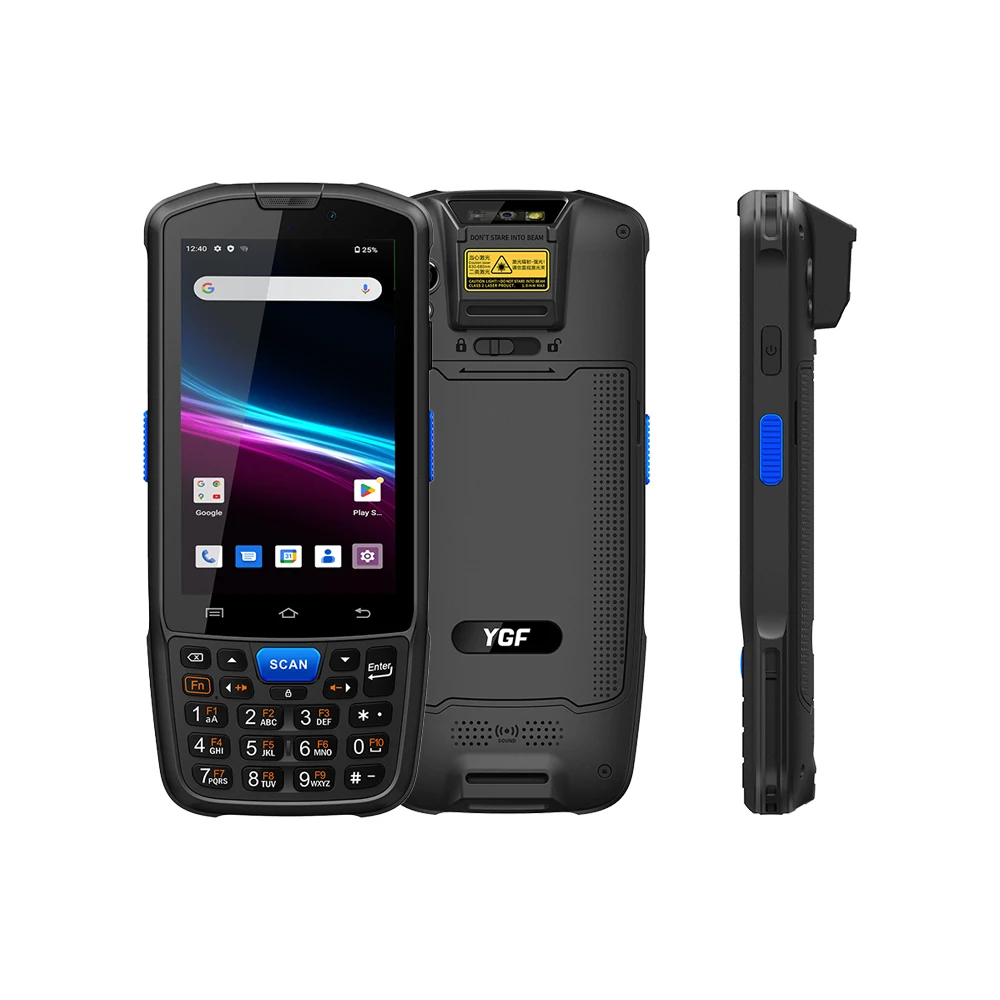
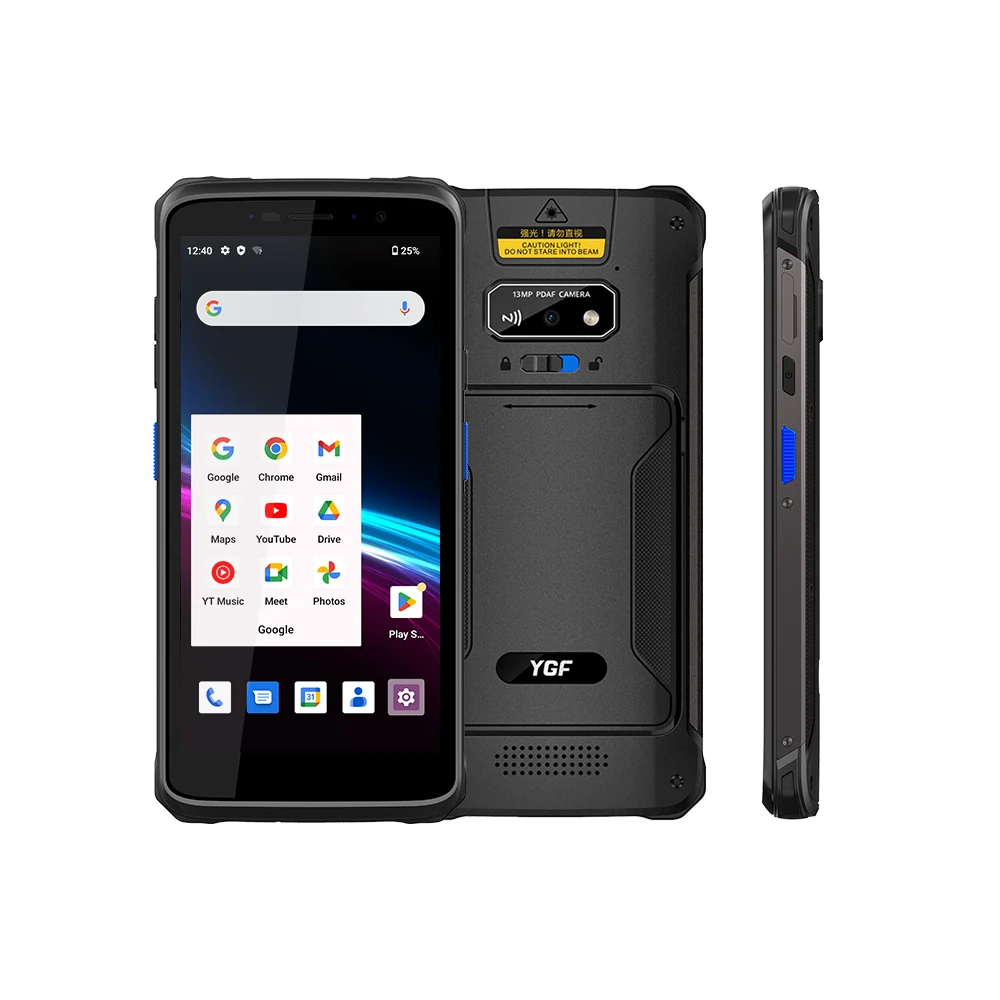
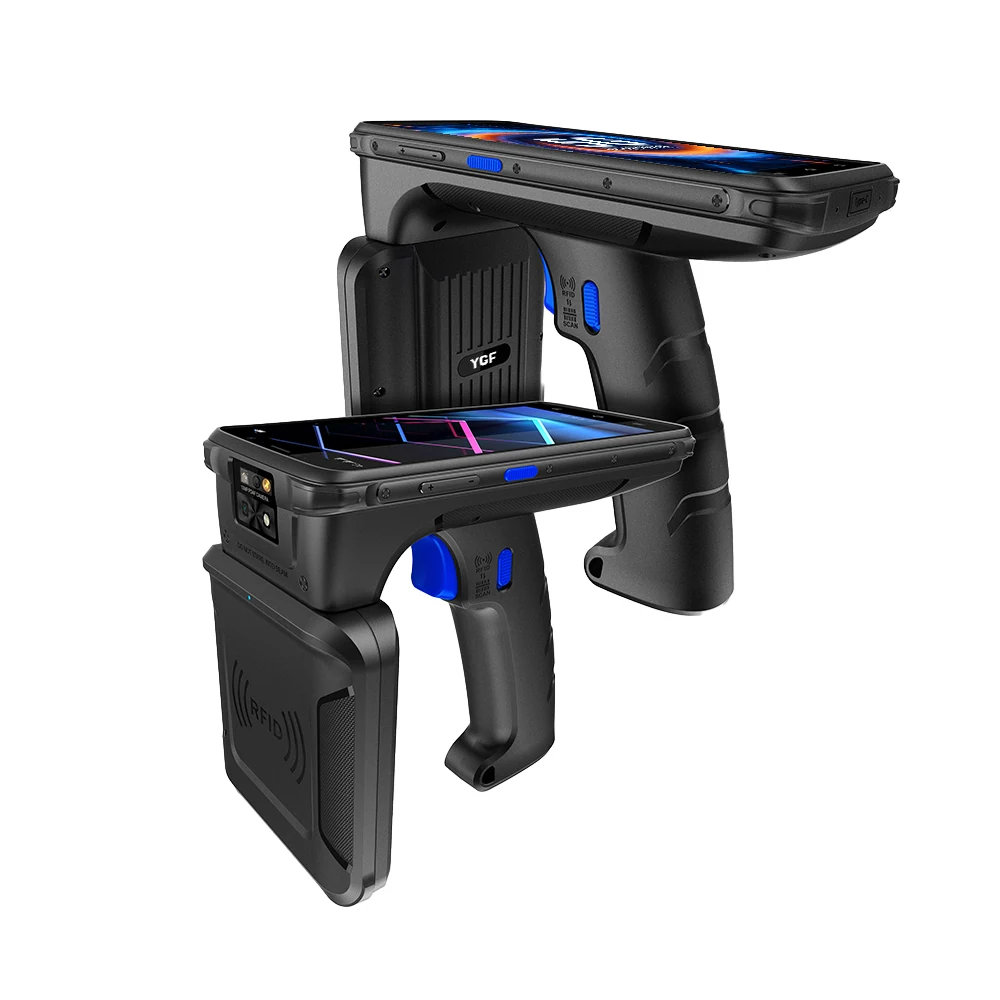
YGF supplied rugged Android PDA terminals built around three priorities that map directly to the dock environment.
| Operational need | What it translates to in hardware |
| Courier does not wait for the device | Enterprise scan engine with high first-read rate on damaged and wrapped labels |
| No stutter during peak sorting | Octa-core platform sized for burst workloads, so scanning, camera and background sync do not compete |
| A full shift on one charge | 5,000mAh battery with 18W fast charging (9V/2A) |
| Survives real field handling | IP67 sealing, 1.5m drop resistance, glove and wet-hand touch modes, −20°C to 55°C operation |
| Runs the existing application stack | Android 14/16 with Google Mobile Services, standard Android SDK for in-house apps |
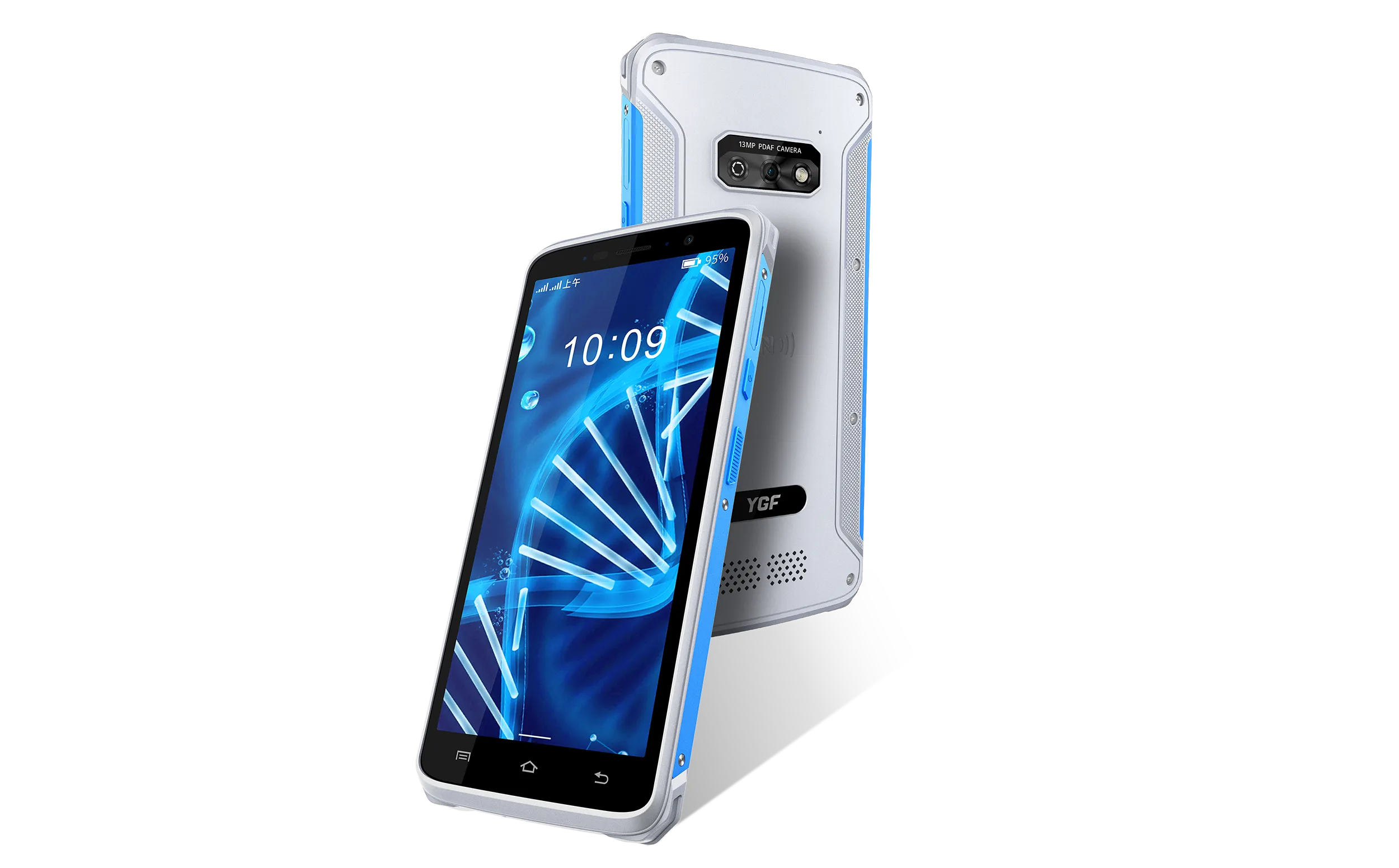
The units deployed in this fleet belong to the F20U rugged Android PDA family — a 5.5-inch, 248g handheld configured with a choice of enterprise scan engines, which allowed a single hardware platform to serve different scanning conditions across hubs and stations rather than introducing a new model for every site.
Management layer
The decisive component was not the device but what sat above it. MDM-enabled remote operations gave KuaYue a single control plane across the terminal fleet:
- Standardization. One baseline configuration applied across cities, so that “it works” means the same thing in Shenzhen and in a county station 2,000 km away.
- Application control. Restricted installation of non-approved software, closing a common and hard-to-trace source of instability and security exposure.
- Remote diagnostics and maintenance. Fault identification and remediation without shipping a unit back or sending a technician out — converting device downtime into a remote action rather than a logistics event.
- Fleet visibility. Device status, application state and task progress observable centrally, giving supervisors a live signal on courier progress and route performance instead of a retrospective one.
This is the part of a logistics PDA deployment that rarely appears in a product datasheet, and it is the part that determines whether a device fleet behaves as equipment or as infrastructure.
Results: what changed in daily operations
Courier workflows became fully digital. Paper fallbacks and manual re-entry were removed from the standard path — the step where most data errors originate.
Delivery accuracy and turnaround improved. Faster first-read scanning and immediate synchronization shortened the interval between a parcel being handled and the system knowing about it, which is the interval that decides whether a cutoff is met.
Downtime and IT load fell. Remote maintenance reduced both the number of physical interventions and the IT resources consumed per incident.
Last-mile data became trustworthy enough to manage against. Reliable capture at the point of delivery gave management a factual basis for routing, staffing and performance decisions instead of an approximate one.
How to specify a logistics PDA: a practical checklist
If you are scoping a handheld terminal rollout for express, LTL or warehousing operations, these are the questions that separate a successful deployment from an expensive pilot.
- Measure first-read rate, not decode speed. Test with your own labels — wrapped, curved, dirty, low-contrast — because that is what the dock actually presents.
- Specify the management layer before the hardware. If you cannot remotely see device state and push configuration, you are buying a maintenance queue.
- Limit the number of models in the field. Each additional platform multiplies spare parts, training and failure modes.
- Check the battery against the real shift, not the datasheet. A double shift with continuous scanning is a different requirement from an eight-hour picking shift.
- Confirm Android version support and lifecycle. Enterprise fleets live five years or more; the OS roadmap matters as much as the spec sheet.
- Test glove and wet-hand operation. Warehouse and yard conditions are not office conditions.
For a broader view of how these requirements differ between distribution centres, fleet management and final-mile delivery, see our logistics and warehousing solutions. To compare form factors, browse the full-touch handheld mobile computers range, or review the full specification of the F20U rugged Android PDA.
Frequently asked questions
What is a rugged PDA for logistics?
A rugged PDA for logistics is an industrial handheld computer built for continuous barcode scanning in harsh conditions — sealed against dust and water (typically IP65 to IP67), rated for repeated drops, operable with gloves or wet hands, and running enterprise Android with a full-shift battery. Unlike consumer phones, it is specified for a multi-year service life and managed centrally across a fleet.
Why does scan speed matter more than processor speed in express delivery?
Because the scan sits in the critical path of a delivery commitment. At a cross-dock, courier dwell time is set by the slowest step in unload, scan and load. A scan engine that needs a second attempt on a wrapped or damaged label adds queue time at the gate, and queue time pushes back linehaul cutoffs. Processor headroom matters mainly insofar as it keeps scanning responsive during bursts.
What is MDM and why does a device fleet need it?
Mobile Device Management (MDM) is the software layer that lets an operations team configure, monitor and repair devices remotely. In logistics it does four things: enforces one configuration baseline across sites, restricts installation of unapproved applications, enables remote diagnostics instead of shipping units back, and gives central visibility into device state and task progress. Without it, every site tends to reinvent its own setup.
How many handheld terminals can one control plane manage?
A well-implemented MDM deployment scales to tens of thousands of devices across multiple cities, provided the configuration baseline is designed before rollout rather than assembled afterwards. The practical constraint is usually organizational — agreeing the baseline — rather than technical.
Should a logistics fleet standardize on one device model?
Yes, wherever the operating conditions allow it. Each additional model in the field adds spare parts, training burden and a distinct set of failure modes. Standardizing on one platform with configurable scan engine options lets a single device serve different reading conditions across hubs, stations and final-mile routes.
How long should a logistics PDA remain in service?
Enterprise fleets commonly run five years or more. That makes OS version support, security patch availability, spare-parts continuity and a guaranteed supply commitment part of the specification, not an afterthought. Confirm the vendor’s lifecycle commitment in writing before the rollout.
About YGF
Shenzhen Yige Technology Co., Ltd. (YGF) is a manufacturing-driven industrial mobility company founded in 2014, specializing in rugged handheld PDAs, mobile computers, RFID terminals and industrial tablets for logistics, warehousing, manufacturing, retail, healthcare and public service. YGF operates fully integrated in-house R&D, SMT production, assembly, testing and supply chain management, and serves system integrators, solution providers and brand owners worldwide as an ODM/OEM partner.
Planning a handheld terminal rollout? Discuss your fleet requirements with our engineering team.